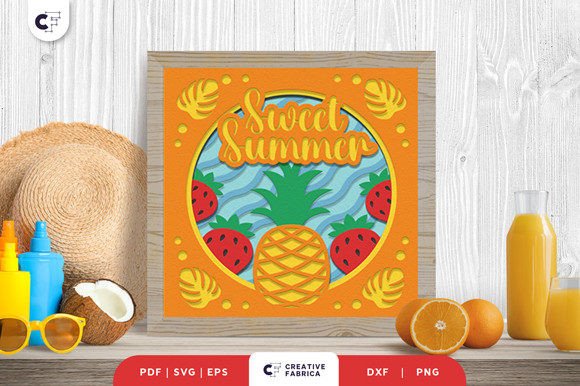
Crafting Tropical Elegance: A Guide to the Sweet Summer Pineapple 3D Shadow Box
The intersection of digital design and tactile craftsmanship has revolutionized how hobbyists and professionals approach home decor. Among the most captivating trends in this space is the creation of layered paper art, specifically the Sweet Summer Pineapple 3D Shadow Box. This project represents more than just a decorative item; it is a study in depth, lighting, and the meticulous arrangement of materials to create a living image. Whether you are an educator teaching design principles, a small business owner looking to expand your product line, or a creator seeking a rewarding weekend project, understanding the nuances of this specific design offers valuable insights into modern papercrafting.
The Artistry of Layered Depth
At the heart of the Sweet Summer Pineapple 3D Shadow Box lies the concept of parallax and depth perception achieved through physical layering. Unlike a flat print, this design utilizes seven distinct layers to construct a scene that draws the viewer in. The central motif, a vibrant tropical pineapple, serves as the focal point, surrounded by foliage and framing elements that recede or advance depending on their placement. This technique mimics the way light interacts with objects in the real world, creating shadows and highlights that give the artwork a dynamic quality.
The complexity of a seven-layer design requires careful planning. Each layer must be precisely cut to ensure that the negative spaces align perfectly with the solid areas of the adjacent layers. When assembled, these layers create a tunnel-like effect, enhancing the three-dimensional illusion. For researchers and designers studying visual perception, this type of shadow box provides a tangible example of how depth cues can be manipulated in a two-dimensional medium to produce a volumetric experience. The result is a piece that changes appearance slightly as the viewer moves around it, engaging the eye in a way that static images cannot.
Technical Specifications and File Compatibility
Successful execution of the Sweet Summer Pineapple 3D Shadow Box begins with the right digital assets. The design is typically distributed in a variety of vector and raster formats to accommodate different workflows and software capabilities. Users receive files in SVG, PDF, EPS, PNG, and DXF formats. This versatility ensures compatibility with a wide range of cutting machines and design software.
- SVG (Scalable Vector Graphics): Ideal for users of Cricut Design Space and Silhouette Studio, allowing for easy manipulation of individual layers without loss of quality.
- PDF and EPS: Preferred by professional graphic designers using Adobe Illustrator or CorelDraw, offering precise control over stroke weights and color separations.
- DXF: A universal format often used in industrial cutting applications or older software versions, ensuring broad accessibility.
- PNG: Useful for previewing the final look or for those who may be adapting the design for digital-only presentations.
The standard size for this particular shadow box is 20.32×20.32 cm (approximately 8x8 inches). This dimension strikes a balance between detail and manageability, making it suitable for display on shelves, mantels, or as part of a larger gallery wall. It is important to note that while the digital files provide the blueprint, the physical outcome relies heavily on the precision of the cutting tool and the quality of the material used.
Material Selection and Structural Integrity
The choice of paper is perhaps the most critical variable in the success of a 3D shadow box. For the Sweet Summer Pineapple 3D Shadow Box, the recommended material is Encore Cardstock, specifically the 80 lb cover weight (216 gsm). This specific weight class is not arbitrary; it is engineered to hold its shape while remaining flexible enough for intricate cuts.
Lighter cardstocks, such as 65 lb, may lack the rigidity needed to maintain the spacing between layers, causing the artwork to collapse inward over time. Conversely, heavier stocks might be too thick for fine details, leading to tearing during the weeding process or difficulty in adhering layers smoothly. The 80 lb cover stock provides the optimal "sweet spot," offering sufficient body to create defined shadows while allowing the adhesive to bond securely without bulkiness. Professionals in the paper crafting industry often emphasize that the texture and finish of the cardstock also play a role; a matte finish tends to absorb light softly, enhancing the shadow effects, whereas a glossy finish might introduce unwanted reflections that distract from the 3D illusion.
Workflow and Assembly Techniques
Creating the Sweet Summer Pineapple 3D Shadow Box is a systematic process that blends technology with handcrafting skills. The workflow generally follows a sequence of digital preparation, mechanical cutting, and manual assembly.
- Digital Preparation: Import the SVG or DXF file into your preferred design software. Verify that all seven layers are present and correctly grouped. Adjust the size if necessary, though maintaining the original 20.32×20.32 cm ratio is advisable for structural balance.
- Machine Setup: Load the 80 lb cardstock onto a strong-grip mat. Ensure the cutting machine, such as a Cricut or Siser, is equipped with a fine-point blade capable of handling intricate details. Calibrate the pressure settings to ensure clean cuts without piercing through the backing mat.
- Cutting and Weeding: Execute the cut for each layer. Once completed, carefully weed away the excess paper. This step requires patience, especially for the inner layers containing the detailed pineapple textures and leaf veins.
- Layering and Adhesion: Begin assembly from the back layer forward. Apply craft glue sparingly to the contact points of each layer. Using foam tape or pre-cut spacers between layers can enhance the 3D effect, but direct gluing is often sufficient if the cardstock is rigid enough. Align each subsequent layer meticulously to preserve the intended visual flow.
- Framing: Once all layers are secured, place the assembly into a deep-set shadow box frame. The depth of the frame should accommodate the stacked layers without compressing them.
This workflow highlights the importance of precision at every stage. A misalignment of even a millimeter can disrupt the continuity of the design, breaking the illusion of depth. For educators teaching STEM or art classes, this project serves as an excellent practical exercise in measurement, spatial reasoning, and sequential logic.
Versatility in Application and Decor
The appeal of the Sweet Summer Pineapple 3D Shadow Box extends beyond the crafting table. Its thematic focus on summer and tropical fruits makes it a versatile addition to various interior design schemes. In residential settings, it acts as a seasonal accent that brings warmth and vibrancy to a room. The pineapple, historically a symbol of hospitality, adds a welcoming touch to entryways or dining areas.
For business owners in the hospitality sector, such as cafes, boutiques, or hotels with a coastal theme, these shadow boxes can be produced in batches to create cohesive decor installations. The ability to customize colors allows businesses to match their brand palette strictly. Furthermore, the modular nature of the design means that creators can experiment with different color gradients—perhaps shifting from deep greens to bright yellows—to evoke different times of day or moods.
Researchers observing consumer trends in home decor will note a shift towards handmade, personalized items that tell a story. The visible layers and hand-assembled nature of this shadow box resonate with consumers who value authenticity and craftsmanship over mass-produced goods. It bridges the gap between digital convenience and analog artistry, appealing to a demographic that appreciates both technological efficiency and the human touch.
Considerations for Final Presentation
While the digital preview images provide a clear expectation of the design, it is essential to understand that the final physical product may vary slightly. Lighting conditions in the display area significantly impact how the shadows fall and how the colors are perceived. Natural daylight will reveal different textures compared to warm indoor lighting. Additionally, the specific batch of cardstock used can introduce subtle variations in hue. This variability is not a defect but a characteristic of handmade items, adding to their unique charm.
When sourcing materials, creators should ensure they have access to high-quality 12×12 cardstock sheets to minimize seams and ensure consistency across layers. The use of specialized cardstock like the recommended 216 gsm variety ensures longevity, preventing warping or fading over time. For those intending to sell these pieces, clearly communicating these natural variations to customers manages expectations and enhances satisfaction.
Expanding Creative Horizons
The Sweet Summer Pineapple 3D Shadow Box serves as a foundational project that can inspire broader creative exploration. Once mastered, the techniques involved—layer management, precise cutting, and strategic adhesion—can be applied to more complex designs. Creators might experiment with incorporating LED light strips behind the back layer to transform the shadow box into a lighted display, further accentuating the depth and creating a glowing centerpiece for evening ambiance.
Moreover, the open-source nature of many SVG communities encourages modification. Designers can swap the central pineapple for other seasonal motifs while retaining the layered framework, effectively creating a year-round collection of shadow boxes. This adaptability makes the underlying design structure a valuable asset for content creators and product developers looking to scale their offerings without reinventing the wheel for each new theme.
In conclusion, the journey from a digital file to a tangible Sweet Summer Pineapple 3D Shadow Box is a testament to the evolving landscape of crafting. It combines the precision of modern cutting technology with the timeless appeal of paper art. By understanding the technical requirements, material properties, and assembly workflows, individuals across various sectors can leverage this design to create stunning, meaningful, and visually captivating works of art. Whether for personal enjoyment, educational demonstration, or commercial venture, this project stands as a prime example of how simple materials, when arranged with intention and skill, can produce extraordinary results.