Integrating the Owl 3D Embroidered Tumbler Wrap 14 into Your Sublimation Workflow
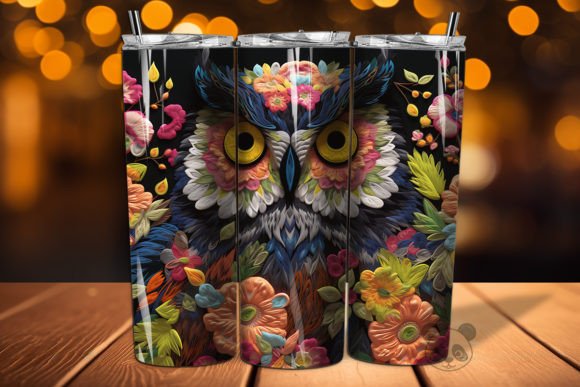
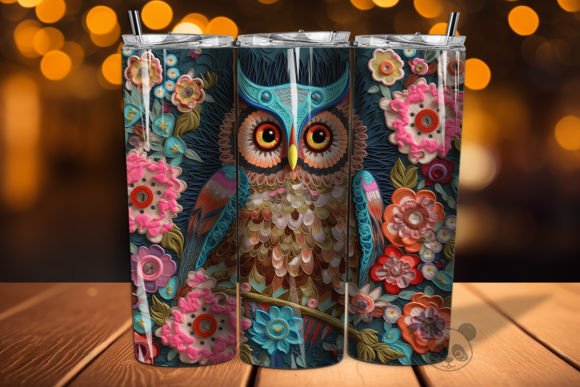
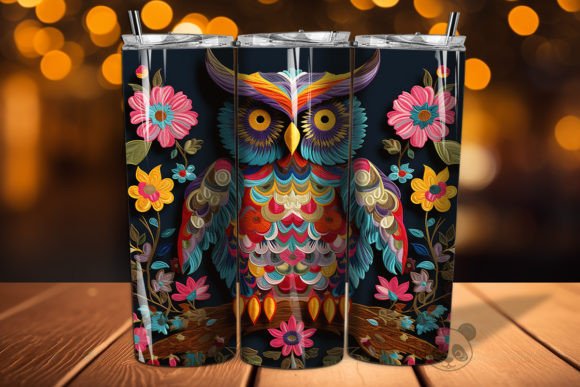
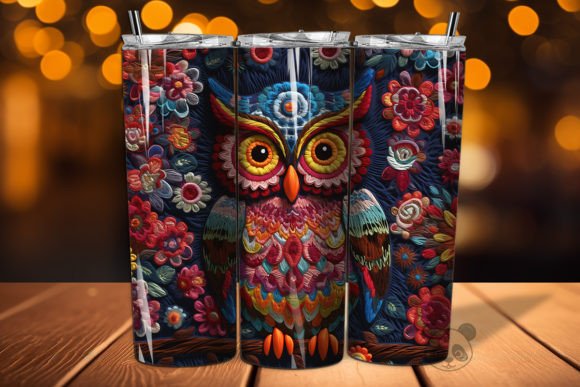
In the competitive landscape of custom drinkware production, the difference between a standard product and a best-seller often lies in the quality and uniqueness of the design asset. For creators, small business owners, and hobbyists utilizing sublimation printing, the Owl 3D Embroidered Tumbler Wrap 14 represents more than just a digital image; it is a strategic component in a streamlined manufacturing process. This specific design, featuring a high-resolution 3D owl motif with an embroidered texture effect, is engineered to solve common pain points in tumbler wrapping, such as pattern alignment, resolution loss, and visual depth.
Understanding how to effectively integrate this digital asset into your broader operational workflow requires a shift from viewing it as a simple purchase to treating it as a critical resource in your production pipeline. Whether you are preparing for a seasonal craft fair, fulfilling bulk orders for a corporate client, or building a portfolio for an online store, the implementation of high-quality wraps like the Owl 3D Embroidered Tumbler Wrap 14 dictates the efficiency of your pre-press phase and the perceived value of your final physical product.
Pre-Production Planning and Asset Verification
The lifecycle of a successful sublimation project begins long before the heat press is turned on. It starts with asset acquisition and verification. When you acquire the Owl 3D Embroidered Tumbler Wrap 14, you are receiving a specialized PNG file sized at 9.3 inches by 8.2 inches at 300 DPI. In a professional workflow, the first step is immediate quality control. Unlike lower-resolution graphics found on free stock sites, this specific resolution ensures that the intricate details of the "embroidered" texture and the watercolor-style background do not pixelate when stretched over the curvature of a 20 oz skinny tumbler.
Before integrating this file into your design software, it is crucial to verify compatibility with your existing toolset. This digital download is intended for use in raster-based editing programs such as Adobe Photoshop, GIMP, or Affinity Photo. If your workflow relies heavily on vector software like Illustrator or CorelDRAW for text overlay, you will need to import the PNG correctly to maintain its transparency and layer integrity. The "3D" aspect of the design relies on shading and lighting effects baked into the raster image; therefore, attempting to edit these specific elements as vectors can degrade the visual fidelity. A prudent planner will create a dedicated folder structure for this asset, separating the raw download from working files to prevent accidental overwrites or version confusion.
Design Integration and Customization Strategies
Once the asset is verified, the next phase involves contextual integration. The Owl 3D Embroidered Tumbler Wrap 14 is designed as a seamless pattern, which offers significant flexibility during the design stage. For entrepreneurs targeting specific niches—such as nature enthusiasts, teachers, or fall-season shoppers—this wrap serves as a robust background that can support additional customization without losing its aesthetic appeal.
A practical approach to using this wrap involves layering. Because the file includes a transparent background (standard for high-quality PNGs), you can place the owl motif over solid colors, gradients, or even combine it with other complementary patterns to create a unique brand signature. However, caution is required. The "embroidered" look provides a tactile illusion that adds depth; covering too much of this texture with heavy text or opaque shapes can diminish the 3D effect. Effective designers use the negative space within the watercolor background to position names, monograms, or logos. This ensures that the primary selling point—the realistic owl texture—remains the focal point while still allowing for personalization that drives higher price points.
Furthermore, consider the orientation and tiling of the wrap. While the file is sized for a standard 20 oz skinny tumbler, understanding the repeat nature of the seamless pattern allows you to adapt the design for different product sizes if necessary. By duplicating and aligning the pattern in your workspace, you can visualize how the design flows around the cylinder, ensuring that no awkward cuts occur at the seam of the tumbler. This foresight prevents material waste and reduces the need for reprints, directly impacting your profit margins.
Execution: From Digital File to Physical Product
The transition from digital planning to physical execution is where theoretical knowledge meets practical application. Using the Owl 3D Embroidered Tumbler Wrap 14 in a sublimation environment requires precise attention to printer settings and heat press parameters. Since this is a digital download and not a physical item, the responsibility for color accuracy lies entirely with the operator. Before committing to a full production run, it is industry standard to print a test strip.
This test should evaluate two main factors: color vibrancy and the preservation of the 3D texture. Sublimation ink behaves differently on various types of paper and under different temperature profiles. The subtle shading that creates the "embroidered" illusion can easily be lost if the heat press temperature is too high (causing ink blowout) or too low (resulting in dull colors). A methodical workflow involves documenting the time, temperature, and pressure settings that yield the best result for this specific design. Once optimized, these settings should be recorded in a standard operating procedure (SOP) document for your team or future reference, ensuring consistency across multiple batches.
During the wrapping process, the dimensions of the file (9.3 x 8.2 inches) are calibrated for a snug fit on a 20 oz skinny tumbler. Proper alignment is critical. Misalignment can result in the owl's features being cut off or the pattern appearing skewed. Using a heat-resistant tape hinge method or a specialized wrapping jig can significantly improve placement accuracy. The goal is to make the seam invisible, allowing the seamless pattern to create the illusion of a continuous, uninterrupted image around the cup. This level of finish is what distinguishes professional-grade merchandise from amateur attempts.
Quality Control and Post-Production Analysis
After the sublimation process is complete and the tumbler has cooled, the workflow moves to quality control. The Owl 3D Embroidered Tumbler Wrap 14 is a high-detail asset, making it an excellent candidate for spotting defects. Inspect the final product for any ghosting, banding, or color shifts. Pay particular attention to the edges of the owl design; sharpness here indicates that the 300 DPI resolution was respected throughout the printing chain. Any blurriness suggests a scaling issue occurred during the file preparation stage.
Beyond physical inspection, consider the market performance of products featuring this design. For marketers and shop owners, tracking which variations sell best provides data for future inventory planning. Does the owl design perform better on matte-coated tumblers or glossy ones? Does adding a name increase the conversion rate? These insights feed back into the pre-production phase, informing how you might customize the wrap for future runs. The versatility of the digital file allows for rapid iteration based on this feedback loop, enabling agile responses to market trends without the need for new design commissions.
Long-Term Utility and Scalability
Investing in premium digital assets like the Owl 3D Embroidered Tumbler Wrap 14 is a decision that supports long-term scalability. Unlike physical inventory that can become obsolete or damaged, digital files remain pristine indefinitely. This allows businesses to scale production up or down based on demand without worrying about stock expiration. Furthermore, the "instant download" nature of the asset means there is no lead time for shipping; once purchased, the file is available for immediate deployment in urgent orders or last-minute promotional campaigns.
For educators and content creators, this type of asset also serves as a teaching tool. It demonstrates the capabilities of modern sublimation techniques, specifically how 2D printing can simulate 3D textures. Incorporating such high-quality examples into tutorials or portfolios enhances credibility and showcases technical proficiency. For freelancers offering design services, having a library of ready-to-use, high-fidelity wraps reduces turnaround time, allowing for faster delivery to clients and the capacity to take on more projects.
Ultimately, the value of the Owl 3D Embroidered Tumbler Wrap 14 extends beyond the image itself. It is a catalyst for a more efficient, professional, and profitable workflow. By treating the digital file with the same rigor as physical raw materials—verifying specs, testing outputs, and analyzing results—creators can maximize the return on their investment. Whether you are a solo entrepreneur managing every step of the process or part of a larger production team, integrating this asset thoughtfully ensures that the final product not only meets but exceeds customer expectations, fostering brand loyalty and driving repeat business.