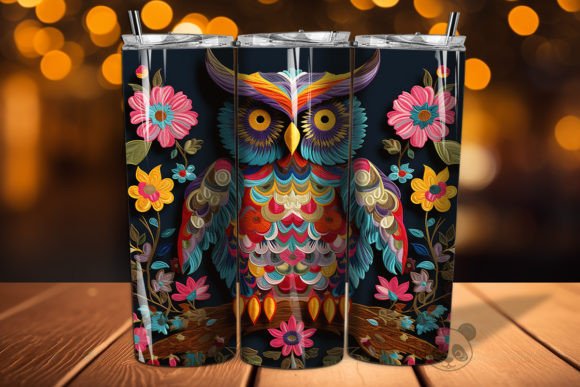
Mastering the Art of 3D Sublimation: A Deep Dive into Owl Tumbler Wraps
In the vibrant world of custom drinkware, few trends have captured the imagination of crafters and small business owners quite like 3D sublimation. If you have been browsing digital marketplaces recently, you may have encountered listings for an Owl 3D Embroidered Tumbler Wrap or a matching Owl 3D Embroidered Tumbler Wrap Background. While these titles might sound like complex technical jargon to a beginner, they represent a fascinating intersection of digital art, textile aesthetics, and modern printing technology. This article aims to demystify what these digital files are, why the "3D embroidered" look is so significant, and how you can leverage them to create stunning 20 oz skinny tumbler designs.
Understanding the Digital Foundation: What Are You Actually Buying?
Before diving into the aesthetic appeal, it is crucial to clarify a common misunderstanding regarding digital downloads. When you purchase a product described as an Owl tumbler wrap PNG or a seamless pattern, you are not receiving a physical tumbler, nor are you buying a printed sheet of paper. You are acquiring a high-resolution digital file—typically a ZIP archive containing a PNG file sized specifically for sublimation printing.
For instance, a standard file for a 20 oz skinny tumbler often measures approximately 9.3 inches by 8.2 inches at 300 DPI (dots per inch). This resolution is non-negotiable for professional results; anything lower will result in a pixelated, blurry image once transferred to the metal surface. The "instant digital download" aspect means that once the transaction is complete, the creative control shifts entirely to you. You become the manufacturer, responsible for sourcing the blank tumblers, the sublimation printer, the heat press, and the execution of the design.
The Illusion of Depth: Decoding the "3D Embroidered" Style
The term "3D" in the context of sublimation wraps can be confusing. In the realm of physical manufacturing, 3D often refers to objects with actual depth, like a sculpted figure. However, in sublimation design, 3D design refers to a visual trickery known as trompe-l'œil (French for "deceive the eye").
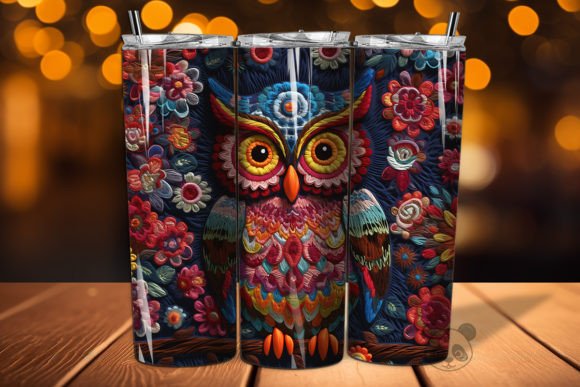
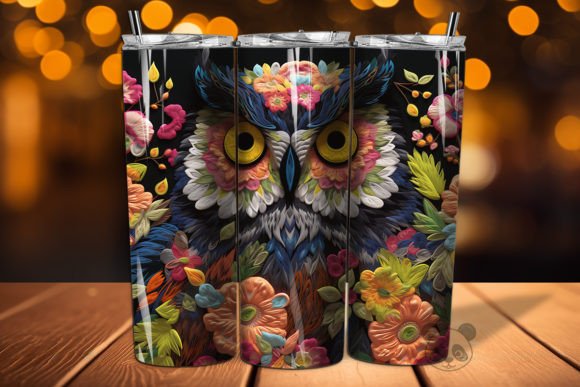
An Owl 3D seamless pattern or an Owl 3D background uses advanced shading, highlights, and shadow mapping to simulate the texture of raised embroidery on a flat surface. When you see an Owl watercolor design that looks like it has been stitched onto the cup with thick thread, that is the power of this specific digital art style. The artist has meticulously painted shadows beneath the "stitches" and added highlights to the tops of them, creating an illusion of tactile depth. This is significant because it allows crafters to offer a premium, textured look without the labor-intensive process of actual machine embroidery, which is difficult to apply to curved, cylindrical surfaces like tumblers.
The Role of Seamless Patterns and Backgrounds
A critical component of a professional-looking tumbler wrap is the background. Many beginners make the mistake of using a solid color or a simple gradient, which can make the final product look flat. This is where the Owl 3D Embroidered Tumbler Wrap Background becomes essential.
A seamless pattern is a graphic element that can be repeated infinitely without visible seams or breaks. In the context of an owl-themed wrap, the background might feature subtle leaves, branches, or abstract textures that match the "embroidered" aesthetic of the main owl graphic. When the main Owl png is layered over this background, the two elements fuse to create a cohesive scene. The background fills the negative space, ensuring that no part of the stainless steel tumbler shows through (unless intended), resulting in a full-coverage, immersive design.
Using a dedicated background file also solves the issue of alignment. Since skinny tumblers require the design to wrap around a narrow circumference, having a background that flows naturally ensures that even if your cut isn't perfectly precise, the transition from the front to the back of the cup remains visually pleasing.
Practical Application: From File to Finished Product
So, how does one take a digital file for instant download and turn it into a sellable product? The process involves several steps that blend creativity with technical precision.
- File Preparation: After downloading the ZIP file, extract the PNG. Open it in sublimation software (such as Photoshop, Illustrator, or specialized sublimation programs). Here, you can mirror the image horizontally. Mirroring is vital because the image transfers in reverse; if you don't mirror it, any text or directional elements in your Owl wrap will appear backward on the tumbler.
- Printing: Print the mirrored design onto sublimation paper using sublimation ink and a compatible printer. Ensure your printer settings are optimized for high-quality photo printing to capture the nuances of the 3D background and the faux-stitch details.
- Wrapping and Taping: Cut the printed design to fit the dimensions of your 20 oz skinny tumbler. Wrap it tightly around the blank tumbler, securing it with heat-resistant tape. The tension must be even to prevent ghosting (blurred lines caused by movement during heating).
- Heat Pressing: Place the wrapped tumbler into a convection oven or a dedicated skinny tumbler heat press. The heat turns the solid ink on the paper into a gas, which permeates the polymer coating of the tumbler. As it cools, the ink reverts to a solid, becoming a permanent part of the surface.
The result is a durable, dishwasher-safe design where the Owl watercolor and 3D embroidery effect feel smooth to the touch but look incredibly textured.
Why This Matters for Modern Creators and Businesses
The rise of assets like the Owl 3D Embroidered Tumbler Wrap 15 signifies a shift in the creator economy. It lowers the barrier to entry for entrepreneurs who want to start a custom drinkware business. In the past, achieving an embroidered look on a tumbler would require expensive machinery and significant skill in hoop placement and stitching. Today, a designer can create the illusion digitally, and a crafter can reproduce it instantly.
This technology fits seamlessly into modern life and work in several ways:
- Educational Value: For students learning graphic design, working with these files teaches valuable lessons about layering, resolution, and the psychology of texture in visual communication.
- Small Business Agility: Shop owners can react quickly to trends. If owls become popular in autumn decor, they can instantly purchase and deploy new designs without waiting for inventory shipments.
- Creative Expression: These files serve as a canvas. Users can add names, monograms, or additional clipart to the base Owl seamless pattern, making each tumbler unique for gifts or personal use.
Common Pitfalls and How to Avoid Them
While the process is accessible, there are assumptions that can lead to disappointment. First, remember that this item doesn't include any physical items. You must have access to a sublimation setup. Second, sizing is approximate. The 9.3 x 8.2 inch dimension is a standard guide, but different tumbler brands vary slightly in diameter and height. Always measure your specific blank before finalizing your print size to avoid gaps or overlaps.
Furthermore, the quality of the final product depends heavily on the quality of the blank tumbler. A high-resolution Owl png cannot fix a poor-quality polymer coating. For the 3D design to pop with vibrancy, ensure you are using high-grade, white-coated stainless steel tumblers designed specifically for sublimation.
Conclusion: Embracing the Digital Craft Revolution
The Owl 3D Embroidered Tumbler Wrap is more than just a pretty picture; it is a testament to how digital art can mimic physical textures to create something entirely new. By understanding the components—the high-DPI PNG, the seamless background, and the illusion of embroidery—crafters can produce goods that rival high-end retail products. Whether you are a hobbyist looking to make a personalized gift or an entrepreneur building a brand, mastering these digital tools opens up a world of creative possibilities. The next time you see a tumbler that looks like it was hand-stitched with intricate owl motifs, you'll know the secret lies not in a needle and thread, but in the clever application of a well-designed digital file.