Integrating the Seahorse from Cracked Hole 3D Tumbler 3 Design into Your Sublimation Workflow
In the competitive landscape of custom drinkware production, the difference between a standard product and a best-seller often lies in the depth and quality of the visual assets used. The Seahorse from Cracked Hole 3D Tumbler 3 represents a specific category of high-fidelity digital assets designed to elevate straight skinny tumbler projects. For entrepreneurs, freelancers, and hobbyists managing a sublimation business, understanding how to integrate this specific 3D sea animal design into a broader production workflow is essential for maintaining efficiency and ensuring consistent output quality.
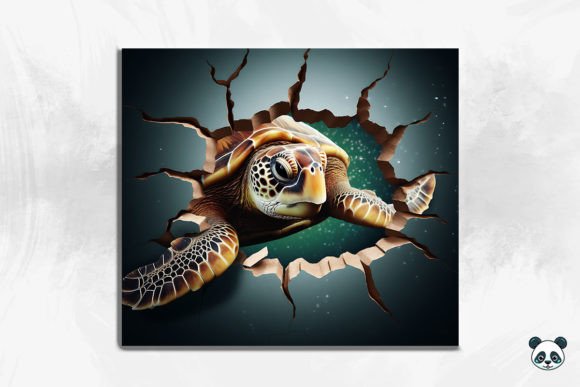
This asset is not merely a static image; it is a pre-engineered solution for the 20 oz skinny tumbler format. By utilizing a design that already accounts for the curvature and dimensions of the target vessel, creators can bypass the time-consuming phase of manual layout adjustment. The "Cracked Hole" aesthetic combined with a realistic 3D seahorse offers a unique visual texture that stands out in saturated markets dominated by flat watercolor or simple vector graphics. Integrating this file requires a shift from viewing digital downloads as isolated purchases to treating them as critical components in a streamlined manufacturing process.
Pre-Production Planning and Asset Verification
Before any heat is applied or ink is printed, the integration of the Seahorse from Cracked Hole 3D Tumbler 3 begins with digital preparation. When you receive the instant digital download, typically contained within a single ZIP file, the first step in your workflow should be immediate verification. The file provided is a PNG with dimensions of approximately 9.3 inches by 8.2 inches at 300 DPI. These specifications are not arbitrary; they are calculated to fit the printable area of a standard 20 oz straight tumbler wrap with minimal waste.
Professionals should organize these files within a structured directory system immediately upon download. A recommended folder hierarchy might separate assets by vessel type (e.g., "Skinny Tumblers"), then by theme (e.g., "Sea Animals"), and finally by specific design ID. This organization ensures that when an order comes in for a marine-themed product, the Seahorse from Cracked Hole 3D Tumbler 3 Background is instantly accessible without searching through unsorted downloads. This practice supports long-term usability and prevents the common bottleneck of lost assets during peak production times.
Compatibility checks are also vital at this stage. Ensure your graphic design software—whether it is Adobe Photoshop, Illustrator, Canva, or specialized sublimation software like Wasatch or Heat Press Nation's tools—can handle high-resolution PNGs with transparency if required. While this specific design often comes as a full wrap, understanding the layer structure (if editable) or the opacity levels is crucial for anticipating how the colors will translate from screen to substrate.
Execution: From Digital File to Physical Product
Once the asset is verified and organized, the workflow moves to the execution phase. This is where the 3D tumbler wrap concept transitions from a digital file to a physical reality. The process involves importing the 9.3 x 8.2 inch PNG into your design canvas. Because the sizing is pre-calculated for a 20 oz skinny tumbler, the need for manual scaling is eliminated, reducing the risk of human error that leads to misaligned seams or cropped imagery.
However, successful implementation requires more than just dragging and dropping the file. You must consider the interaction between the Sea Animal 3D seamless pattern and the sublimation paper you are using. High-density 3D designs often contain deep shadows and vibrant highlights, such as the textured "cracked hole" background and the detailed scales of the seahorse. To preserve these details, your printer settings must be calibrated for high-quality photo output. Using a generic "draft" setting may result in banding or loss of detail in the darker areas of the 3D effect, diminishing the premium feel of the final product.
During the printing phase, mirror imaging is a non-negotiable step for sublimation. Since the Seahorse from Cracked Hole 3D Tumbler 3 features directional elements (the orientation of the seahorse), failing to mirror the image will result in a backward design on the finished tumbler. After printing, allow the ink to dry completely to prevent smudging, which can ruin the crisp lines of the 3D rendering. Cutting the sublimation paper to the exact size of the printed area, or slightly larger to account for taping, ensures a clean application without white borders interfering with the seamless ocean background.
Application Techniques and Quality Control
The application of the wrap is where the theoretical design meets physical constraints. When applying the Sea Animal tumbler wrap to a coated stainless steel tumbler, tension management is key. The 3D nature of the design means that any wrinkles or air bubbles will be highly visible, disrupting the illusion of depth. Use heat-resistant tape to secure the paper tightly, ensuring the seam aligns perfectly. For the Seahorse from Cracked Hole 3D Tumbler 3, pay special attention to the alignment of the background pattern; a misaligned seam can break the continuity of the underwater scene.
Pressing parameters must be adjusted to accommodate the complexity of the design. While standard times and temperatures apply to the substrate, the density of the ink coverage in a 3D design may require slight adjustments to ensure full gas transfer. Monitor the press closely. Over-pressing can lead to color shifting, particularly in the blues and teals of the sea animal watercolor elements, while under-pressing may result in a ghosted or faded appearance. Consistency here is paramount for business owners who need to replicate results across multiple units.
Post-press quality control involves a thorough inspection once the tumbler has cooled. Check for any "ghosting" caused by paper movement, ensure the colors match the vibrancy of the original PNG, and verify that the 3D effect appears dimensional rather than flat. The goal is to leverage the 3D design capabilities of the file to create a tactile visual experience. If the output does not meet the standard of the source file, revisit your printer profiles and pressing variables before proceeding with batch production.
Strategic Integration into Business and Creative Workflows
Beyond the mechanical steps of printing and pressing, the Seahorse from Cracked Hole 3D Tumbler 3 serves a strategic role in product diversification. For marketers and small business owners, this asset allows for rapid prototyping of new product lines without the cost of custom illustration. It fits seamlessly into seasonal launches, such as summer collections or ocean-conservation themed campaigns. By having a library of ready-to-use, high-quality assets like this, creators can reduce their time-to-market significantly.
This digital file also interacts effectively with other customization methods. It can serve as a base layer for additional personalization, such as adding a monogram or a name using a contrasting font that complements the 3D background. However, care must be taken not to clutter the design; the strength of the Sea Animal 3D seamless pattern lies in its immersive quality. Adding too many foreground elements can detract from the depth of the cracked hole effect and the realism of the seahorse.
Furthermore, understanding the licensing and usage rights included in the instant digital download is part of professional due diligence. While the file is ready for commercial use in creating physical goods, it is strictly a digital asset. No physical tumblers or printing services are included. Entrepreneurs must factor in the costs of blanks, ink, paper, and electricity when pricing their final products. The efficiency gained by using a pre-sized, high-DPI file like this directly impacts the profit margin by reducing labor hours spent on design adjustments.
Long-Term Usability and Maintenance
To maximize the value of the Seahorse from Cracked Hole 3D Tumbler 3, treat the digital file as a long-term inventory item. Store backups in cloud storage and local drives to prevent data loss. As trends evolve, this specific 3D sea animal design may cycle back into popularity, and having it organized and ready allows for immediate reactivation of the product listing. Regularly review your stock of digital assets to ensure you have a diverse range of themes, from sea animals to geometric patterns, to cater to varying customer preferences.
In conclusion, the successful deployment of the Seahorse from Cracked Hole 3D Tumbler 3 relies on a disciplined approach to file management, precise printing protocols, and careful application techniques. By viewing this PNG not just as an image but as a integral component of a refined sublimation workflow, creators can achieve professional-grade results consistently. Whether you are a freelancer fulfilling a single custom order or a business owner running a high-volume shop, the integration of high-quality, pre-formatted 3D designs streamlines operations and enhances the perceived value of the final product.