Mastering the Sea Turtle from Cracked Hole 3D Tumbler Design for Professional Results
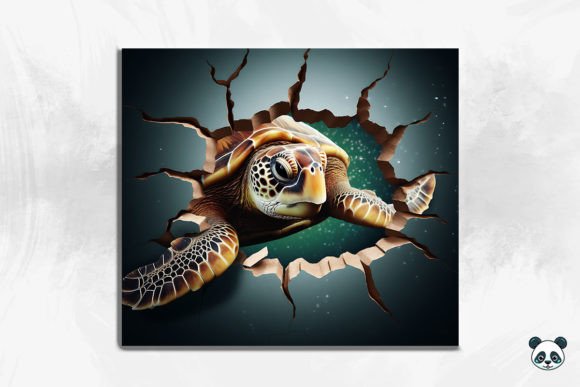
The allure of sublimation printing lies in its ability to transform a blank canvas into a vibrant, personalized item. Among the trending designs capturing the attention of creators and small business owners is the Sea Turtle from Cracked Hole 3D Tumbler. This specific design features a realistic sea turtle appearing to burst through a fractured surface, offering a dynamic depth that flat illustrations simply cannot match. Whether you are a hobbyist looking to create gifts or an entrepreneur building a product line, understanding how to properly utilize this digital asset is crucial for achieving a professional finish.
However, diving into 3D sublimation without a clear strategy often leads to wasted materials and frustration. Many users purchase high-quality files like this 20 oz Skinny Tumbler Sublimation Design only to find their final product looks distorted, pixelated, or misaligned. The issue rarely lies with the design itself but rather with how the file is prepared and applied. By recognizing common pitfalls in the workflow, you can ensure your sea animal watercolor backgrounds and 3D patterns translate perfectly from screen to steel.
Understanding the Digital Asset Before You Print
When you acquire an instant digital download PNG for a tumbler wrap, it is easy to assume the work is done once the file is in your folder. A frequent mistake beginners make is skipping the technical inspection of the file specifications. The Sea Turtle from Cracked Hole 3D Tumbler typically comes as a high-resolution image, often around 9.3 inches by 8.2 inches at 300 DPI. While these dimensions are suitable for many standard skinny tumblers, they are not universal.
If you attempt to stretch this image to fit a tumbler with a significantly different circumference or height without adjusting the aspect ratio, the 3D effect will suffer. The "cracked hole" illusion relies on precise perspective; distorting the image makes the turtle look flattened or the cracks appear unnatural. Always measure your specific tumbler blank before opening your design software. If your tumbler requires a larger wrap, do not simply scale up the image beyond its native resolution, as this introduces pixelation that ruins the crisp edges of the sea animal png.
Navigating the Seamless Pattern Challenge
One of the most overlooked details when working with a Sea Animal 3D seamless pattern is the alignment of the seam. A seamless pattern is designed to tile infinitely, but when wrapped around a cylinder, the start and end points must meet perfectly to maintain the continuity of the background. A common error occurs when users center the main subject—the sea turtle—without accounting for where the wrap overlaps.
If the overlap cuts directly through the turtle or a prominent crack in the design, the 3D illusion breaks immediately. To avoid this, you should use your sublimation software to preview the wrap on a 3D mockup of a cylinder. Adjust the horizontal position of the Sea Turtle from Cracked Hole 3D Tumbler graphic so that the seam falls in a less critical area of the background, such as a solid color section or a less detailed part of the watercolor texture. This ensures that when the tumbler is rotated, the viewer sees a continuous ocean scene rather than a jarring discontinuity.
Color Management and Printer Profiles
The vibrancy of a sea animal background depends heavily on accurate color reproduction. A significant misunderstanding among new sublimators is trusting the colors on their monitor to match the final print. Monitors emit light (RGB), while sublimation ink absorbs light on polyester coatings (CMYK). Without proper color profiling, the deep blues of the ocean in your Sea Animal tumbler wrap might print as muddy purples or washed-out grays.
To correct this, ensure you are using ICC profiles specific to your printer, ink, and paper combination. Before committing to a full production run, print a small test strip of the design. Check specifically for the gradient transitions in the watercolor elements and the contrast in the 3D cracks. If the blacks are not deep enough, the "hole" effect will lack depth. Making these adjustments digitally before pressing saves both time and the cost of ruined blanks.
Application Techniques for Flawless Wraps
Even with a perfect print, the physical application process can introduce errors. When applying a straight tumbler wrap PNG, tension is key. A common mistake is applying the sublimation tape too loosely or too tightly. If the wrap is loose, heat expansion during the press cycle can cause the image to shift, resulting in ghosting or blurred lines. Conversely, excessive tension can cause the paper to tear or the tumbler to warp slightly, affecting the fit of future lids.
For the Sea Turtle from Cracked Hole 3D Tumbler, pay extra attention to the edges. Because the design often features high-contrast elements near the borders to simulate the break in reality, any slippage here is immediately noticeable. Use high-heat resistant tape and apply it firmly across the seam. Some professionals recommend wrapping the tumbler with a second layer of plain butcher paper over the sublimation paper to ensure even pressure and absorb any excess ink that might bleed.
Verifying Compatibility and Usage Rights
Before purchasing or downloading any design, it is vital to understand what you are actually buying. As noted in product descriptions, items like the Sea Turtle From Cracked Hole 3D Tumbler Background are digital files only; no physical tumblers or printing services are included. A frustrating scenario for many buyers is expecting a finished product or assuming the file works with vinyl cutters. This design is optimized for sublimation printing on coated stainless steel or ceramic, not for adhesive vinyl application.
Additionally, always review the licensing terms. While many creators allow for commercial use of their Sea Animal seamless pattern designs, there may be restrictions on reselling the digital file itself. You are generally purchasing the right to print the design on physical goods, not to redistribute the PNG. Respecting these boundaries protects your business from legal issues and supports the artists who create these intricate 3D designs.
Making the Right Choice for Your Project
Selecting the right design involves more than just picking an image you like; it requires evaluating how that image fits your technical capabilities and market needs. The Sea Turtle from Cracked Hole 3D Tumbler is an excellent choice for those wanting to showcase advanced printing techniques, but it demands precision. If you are just starting, consider practicing with simpler solid-color wraps before attempting complex 3D illusions.
Ultimately, the quality of your final product reflects your attention to detail throughout the entire process—from file selection and resizing to color management and heat pressing. By avoiding the traps of improper scaling, poor seam alignment, and uncalibrated colors, you can produce stunning sea animal wraps that stand out in a crowded marketplace. Take the time to learn the nuances of your equipment and the specifics of your digital assets, and your creations will consistently delight customers and elevate your brand.